
A 20th-Century Industrial Fortress In A Gold Rush Era Disguise
This building’s character and history is defined by weight, innovation, and logistics.
When the Blake, Moffitt & Towne Paper Company took over this parcel, they built the enduring structure you are standing in today in 1927. They designed this 20,000-square-foot fortress of board-formed concrete, engineered to withstand the floods of the Sacramento River and the fires that had claimed so many of the city’s earlier structures. From this floor, paper flowed out to every corner of the American West: ledgers to account with, newspapers to stay informed with, and the fine stationery that built a modern California.
The Pillars of Front St.
FROM COUNTY SLIGO, IRELAND TO SACRAMENTO’S FRONT STREET
The Rise of an Industrial Pioneer
In July 1851, a young Irish immigrant named John Black arrived in Sacramento with nothing but his grit. He started as a “roustabout,” usually an itinerant laborer, hauling heavy sacks of flour off riverboats just steps from where you are standing. Within months, he jointly owned a lucrative lunch stand with a man named William Crowley. They called it the “Union House” and sold it just before Sacramento’s great fire in 1852 destroyed over eighty percent of the city.
By 1862, Black established the Fountain Bakery less than one block away on L Street between Front and 2nd Streets. In order to supply his bakery he bought a cracker machine and began the manufacture of crackers. He eventually moved to his new production headquarters at 1119 Front Street, just a stone’s throw away from his bakery and in-between two narrow hotels. Black purchased the finest machinery of the time for his business: a Rager’s Centennial Self-Scrapper and a Hall Bros.’ Reel Oven.
Produced at this exact spot, John Black’s crackers and baked goods fed the gold miners and railroad workers of the West Coast.
THE CAPITAL CANDY & CRACKER CO.
This 1918 letter represents the final era of the Black family’s industrial legacy. Long after John Black’s death in 1896, the company evolved into a regional powerhouse. Within a decade of this letter being written, the bakery would make way for the paper house of Blake, Moffitt, and Towne.
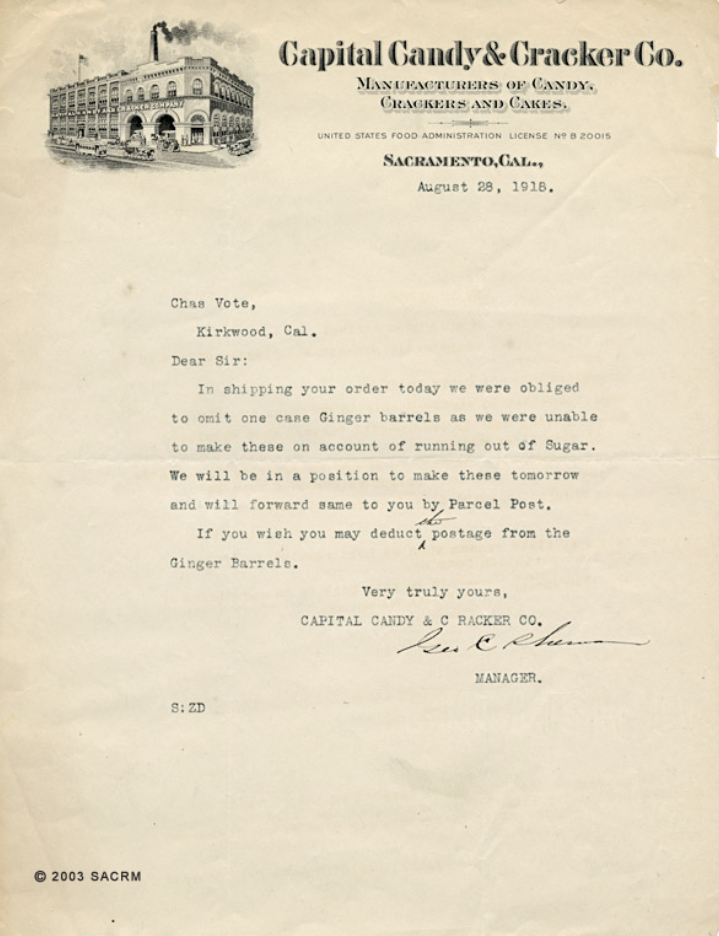
A letter to from the Capital Candy & Cracker Co. to Kirkwood, Cal. informing them of delayed order due to low sugar supplies sugar. c.1918.
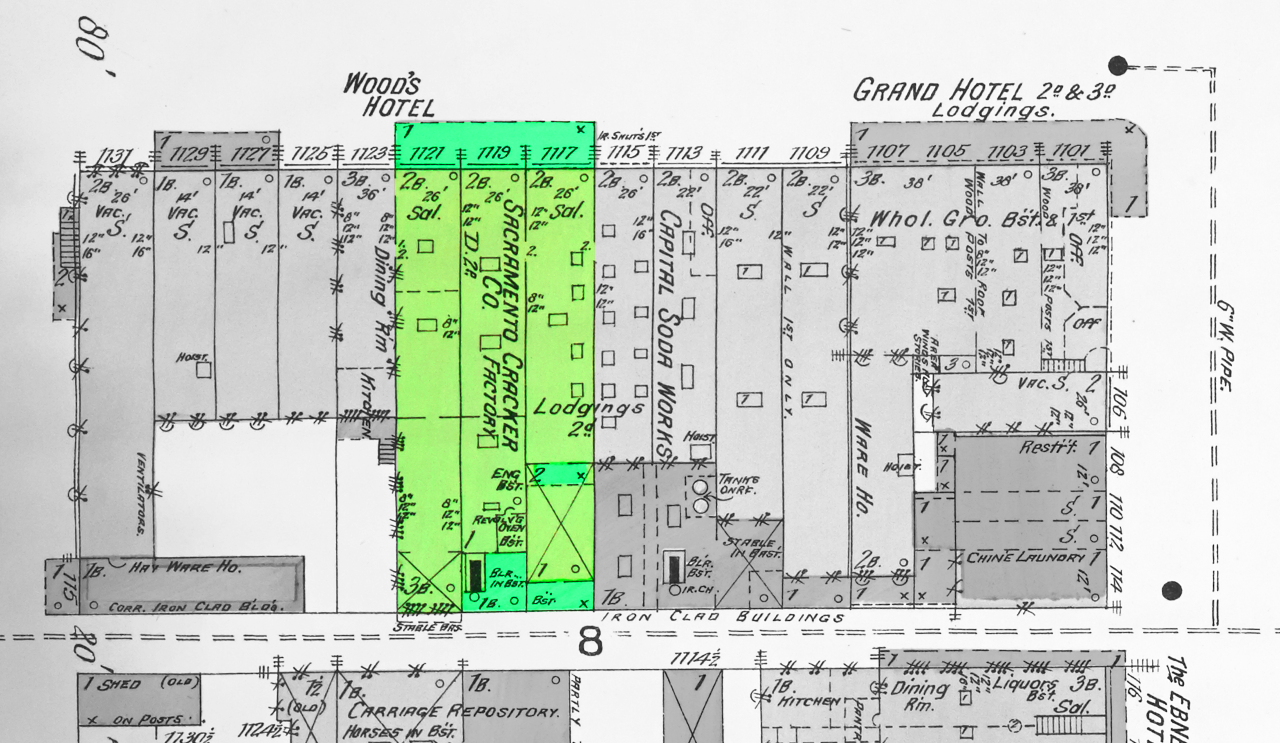
Sanborn Fire Insurance map showing the original location of the Capital Candy & Cracker Company Factory on Front Street in Sacramento’s “West End”. c.1895
TRAGEDY AT THE BAKERY
Industrial success was shadowed by personal tragedy. On May 14, 1867, the Fountain Bakery became a crime scene. John Black’s brother-in-law, James Levy, arrived at work intoxicated and “creating a disturbance.” Levy had previously been discharged from the bakery for “intemperance” and “neglect of duty.” In the ensuing struggle, Black fired a pistol, striking Levy in the neck.
In a bizarre twist of Victorian morality, Black personally cared for the dying man in his own home until Levy succumbed to his wounds ten days later. Black surrendered himself to the authorities. The community stood behind him and his $10,000 bail (a fortune in 1867) was paid instantly by Sacramento’s leading citizens.
A SHOT IN THE DARK
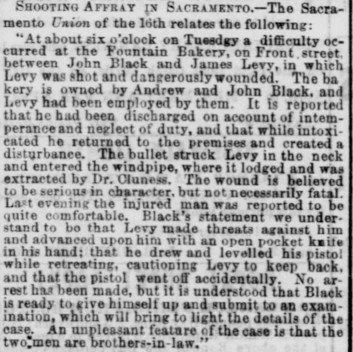
“Shooting Affray in Sacramento”
Daily Alta California
Volume 19, Number 6272, 17 May 1867
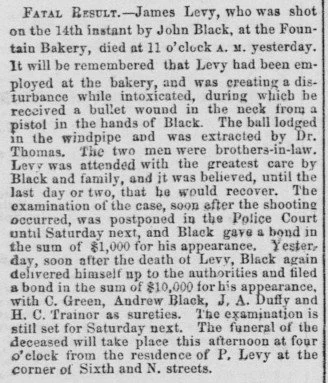
“Fatal Result”
The Sacramento Daily Union
Volume 33, Number 5041, 24 May 1867
John Black’s Final Mystery
Born When…?
History is rarely a straight line. If you visit the Sacramento Historic City Cemetery, you will find Black’s grave and modest headstone, which he shared with his wife, Rose. Look closely at the stone: it lacks both a date of birth and death. The 1860 Census says Black was born in 1833. The 1880 Census says he was born in 1835, while the county history records him as born in 1836. Black’s death is recorded on March 23, 1896, but his age at the time of his death has only been surmised by his obituary.
Perhaps it is fitting for a man who survived a shipwreck as a boy, built a baked goods empire from a quaint lunch stand, and walked free after a fatal shooting to leave us with one last contradiction.
Black’s story also illustrates the difficulty of historical research and precise dating. The United States did not have a formalized and uniformly adopted standardized birth certificate until the 1930s. Chronological age and birthdays did not hold the same importance as they do now—indeed, many individuals did not know their exact birth year.
Black’s obituary in the Sacramento Union, dated March 24, 1896, read as follows:
BLACK: In this city, March 23rd, John Black, father of J.Grant, Minnie, Clara, and the late Andrew Black, a native of Ireland, age 62 years. Friends and acquaintances are respectfully invited to attend the funeral today (Wednesday) at 9:15 am from his late residence, no. 1119 Front Street, thence to the Cathedral, where requiem High Mass will be celebrated for the repose of his soul, commencing at 10am. The casket will not be opened in the Cathedral. Friends can view remains at his late residence from 1 p.m. today until the hour of the funeral.
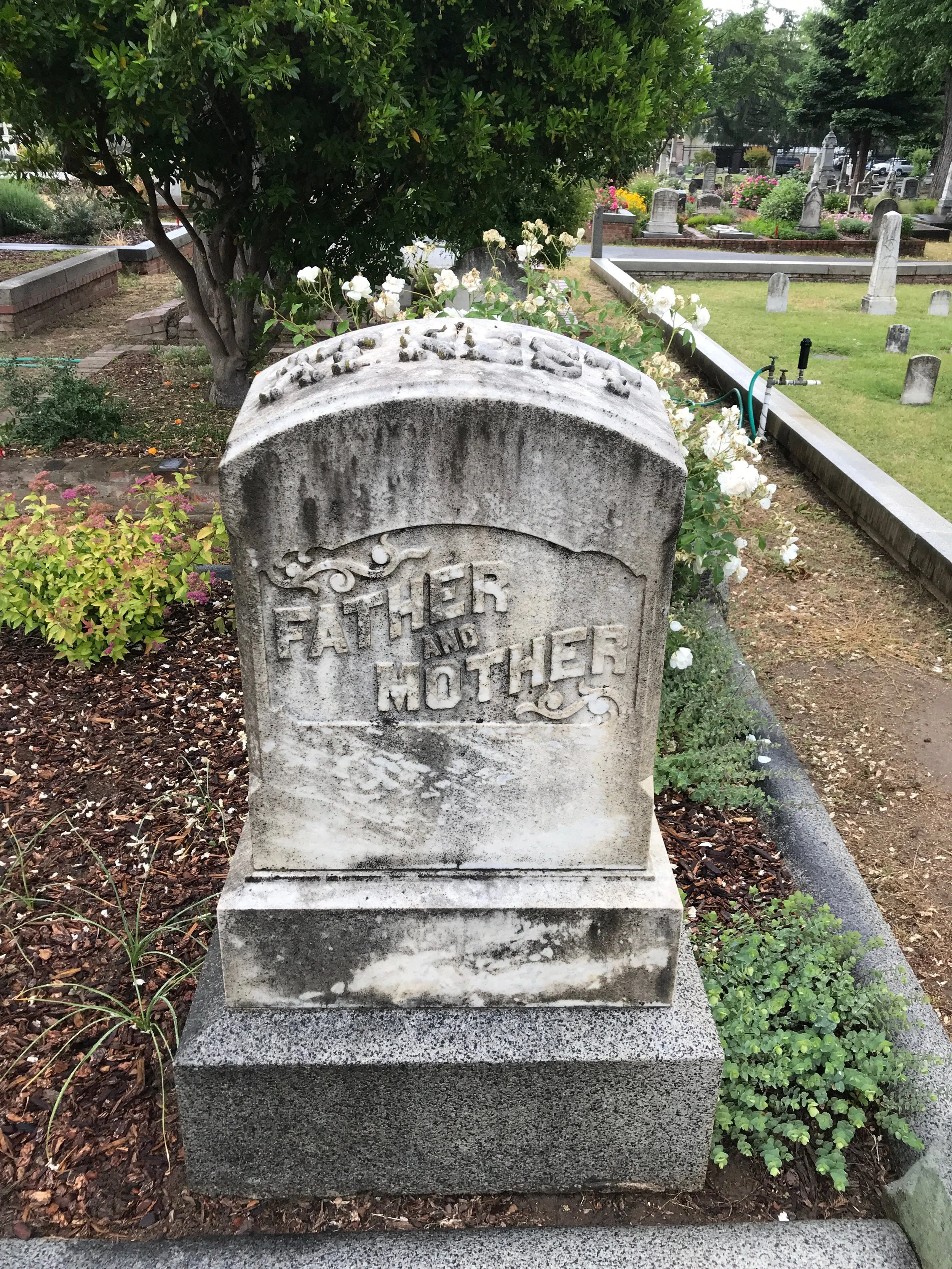
Grave and headstone of John and Rose Black.
Sacramento Historic City Cemetery, Sacramento, California
THE GREAT PIVOT: 1924
The Rise of the Paper Titans
By the early 1900s, cities slowly started to shift away from extravagant Victorian architecture to a modernist and sleek look that represented technological progress. The Capital Candy & Cracker Company eventually moved its operations, leaving behind a legacy of the pioneer spirit of John Black. While the fate of the Cracker company’s production facility is unclear, a plausible explanation is a planned demolition that made way for a new era.
By 1924, the legacy firm of paper merchants Blake, Moffitt, and Towne had arrived in Sacramento.
The Pioneer Paper House
By the mid-1920s, Sacramento’s “Mill Row” was vanishing. In its place rose a reinforced concrete fortress built for the Blake, Moffitt & Towne Paper Company. Founded during the Gold Rush in San Francisco, Blake, Moffitt & Towne was known as the Pioneer Paper House of the Pacific. BM&T was a West Coast paper merchant and distributor that supplied both fine printing papers and industrial paper products.
BM&T first took over a local paper house’s quarters at 1021 Front Street in 1924 in their efforts to expand to Sacramento. The building was inadequate to handle the demands of the Sacramento branch, and so a new building at 1115 Front Street was constructed. The building officially opened its doors on August 27, 1927.
Modern Industry Arrives At the 1100 Block of Front St.

The Bear of the West
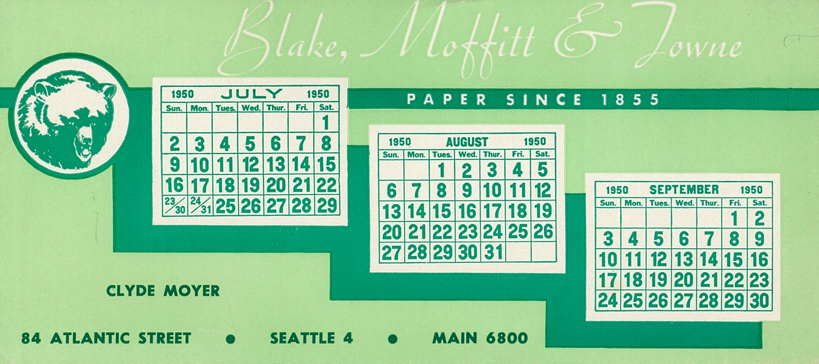
The Blake, Moffitt & Towne paper company was founded in San Francisco in 1855, just five years after California achieved statehood. At that time, the California Grizzly Bear was the ultimate symbol of the untamable nature of the West and its frontier pride and independence.
The “Cracker” Myth?
Correcting the Record
For years, locals and city officials have called this the building “The Cracker Building.” While the Black family certainly baked crackers on this parcel in the mid-to-late 1800s, the building you see today is actually a monument to the West Coast’s Paper Industry.
From 1927 until the late 20th century, this was a place of logistics and commerce. While the true fate of the original “Cracker Building” remains uncertain, its most likely end came in the form of a planned demolition along with the rest of the dilapidated, combustible buildings along Mill Row in the 1920s.
A REINFORCED EVOLUTION
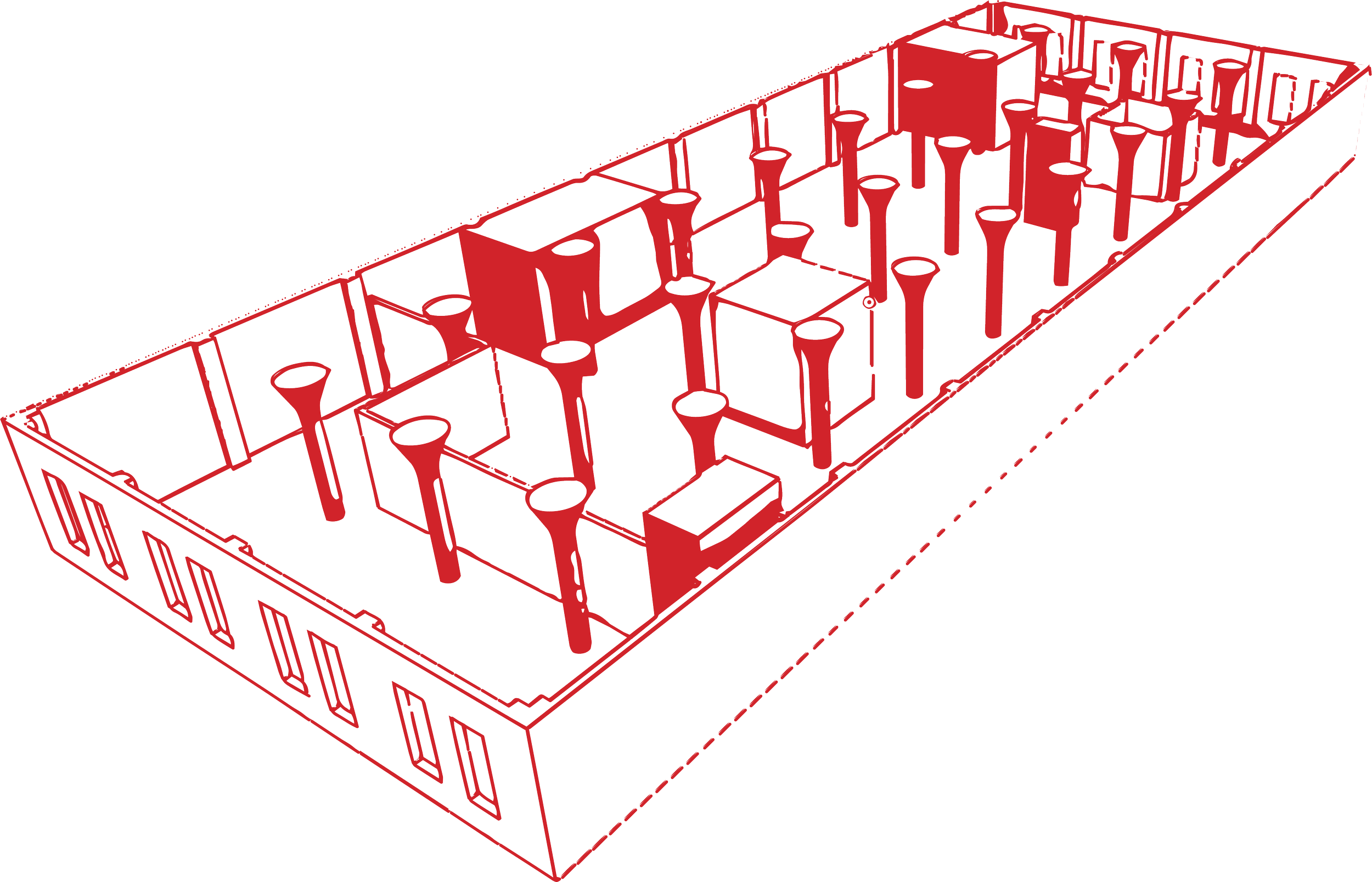
The high ceilings and massive support columns weren’t for beauty or aesthetics, they were for structural survival. In an era of seismic uncertainty, these characteristics allowed workers to grade and cut paper with precision and safety. The reinforced concrete floors were engineered to hold tens of thousands of pounds of paper products, protecting the building from the constant threat of earthquakes and riverfront fires.
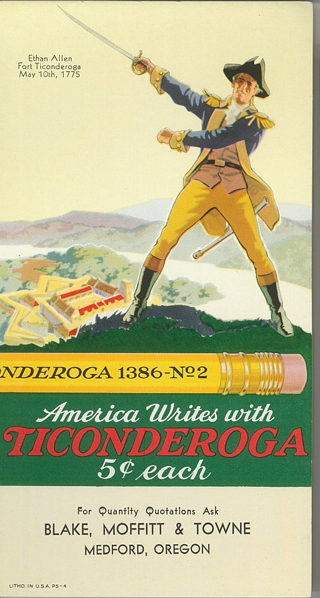
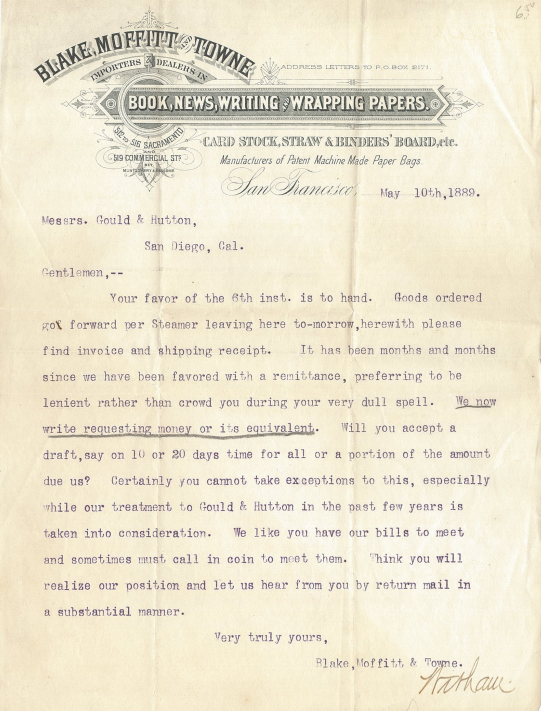
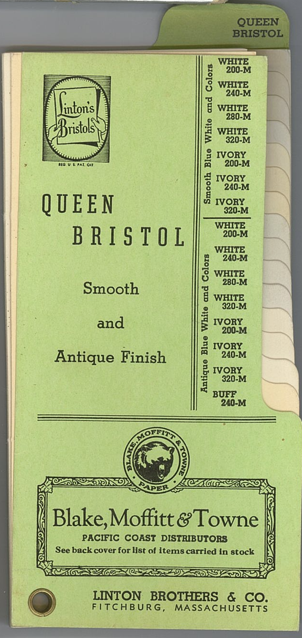
Assorted Blake, Moffitt, and Towne memorabilia
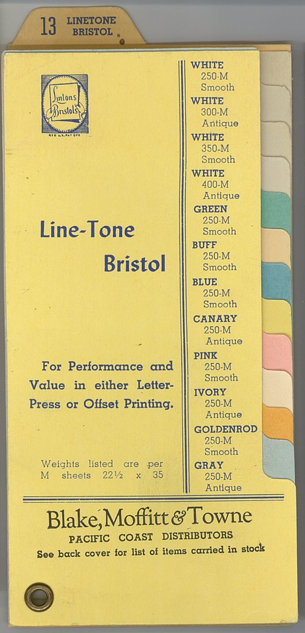
Blake, Moffitt, & Towne
Who were Blake, Moffitt & Towne?
Blake, Moffitt, and Towne’s (BM&T) story began in San Francisco in 1855 with Francis Blake and James Moffitt starting off in the printing business. One of the first printing companies to advertise themselves as paper merchants to meet supply scarcity, Blake and Moffitt eventually joined forces with James Towne in 1868 strictly as a paper house.
The pioneer paper company expanded along the coast with divisions including, but not limited to, Portland, Los Angeles, Seattle, and Tacoma. In 1924, BM&T expanded to Sacramento, California when they took over the local Richardson-Case Paper Company’s building at 1021 Front Street. However, their booming business quickly outgrew the facility and construction on a new building began in January 1927.
BM&T’s newly constructed building, located at 1115 Front Street, held its open house on August 27, 1927. The new building was meant for the local offices, salesrooms, and general warehouse space for equipment.
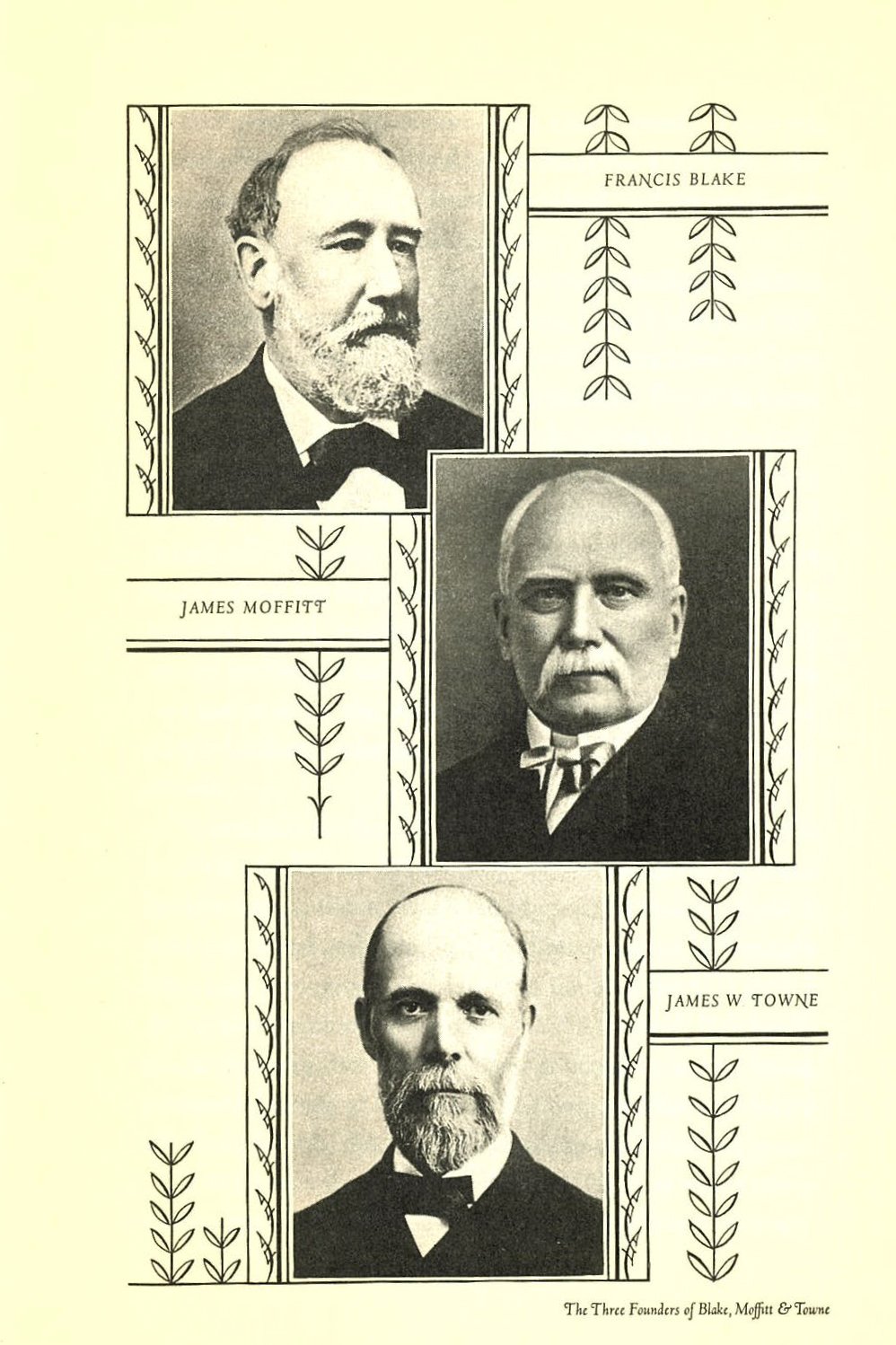
The Founders of Blake, Moffitt, & Towne
From Pioneers in Paper: The Story of Blake, Moffitt & Towne, p.11
THE 1960’S MAKEOVER
A Modern Misfit Joins the Past
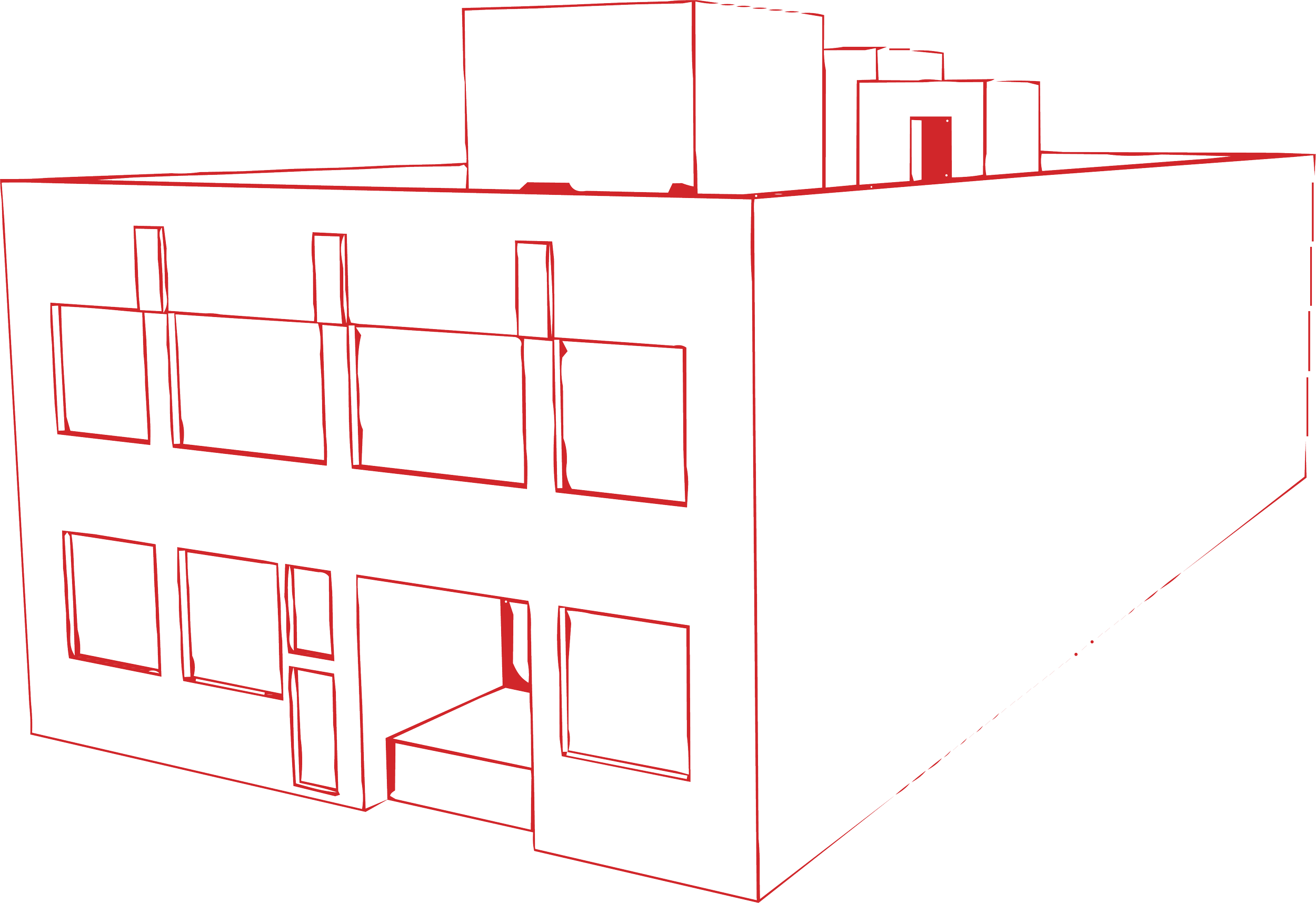
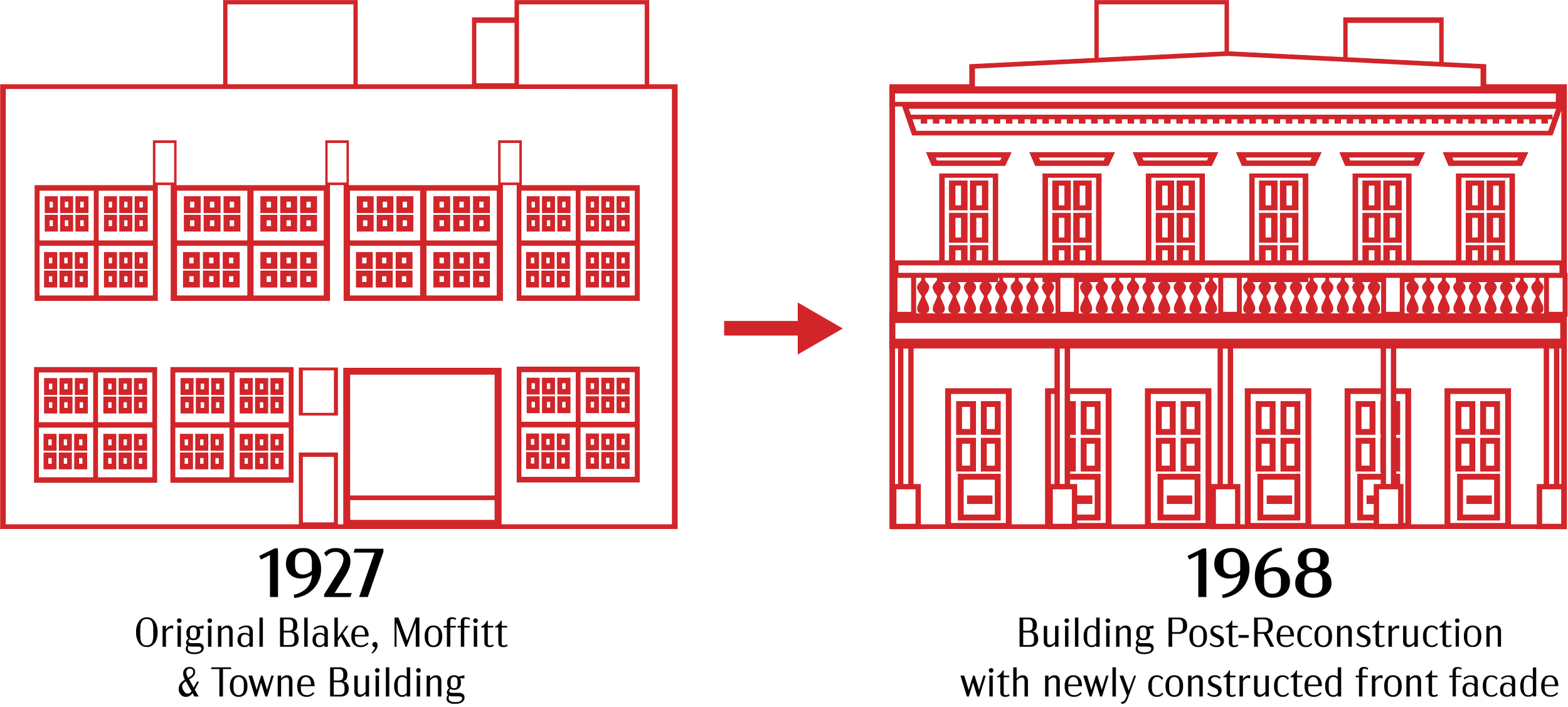
In the 1960s, as Old Sacramento was being reconstructed to look like the California Gold Rush era of the 1800s, this more modern 1927 industrial monolith didn’t exactly fit the aesthetic the State was seeking. To save the building (and to avoid a challenging, costly and hazardous demolition), architects removed the oversized modern warehouse windows and created a false facade on the street-facing side to help it blend in with the aesthetic of its neighbors.
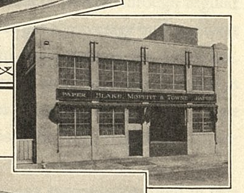
1927 Sacramento Bee photograph at the opening of the Blake, Moffitt & Towne Sacramento Branch
The HIDDEN Loading Docks: When entering the building, you will notice that there are three steps up. Once inside, you would be standing on what was once a high-capacity elevated loading dock. Behind the 1960s renovation lies a building designed for massive cargo, not foot traffic. In the alley behind the building (now the Back Door Lounge bar and restaurant), the soaring staircases are the remnants of the receiving platforms where paper was hoisted from delivery trucks.
The Concrete Fortress
Wood or Stone? The Secret of the Grain
Observe the interior and exterior walls of the building. They look like weathered wood planks, but if you touch them, your hand will meet immovable stone.
This is Board-Formed Concrete. In 1925, massive wooden forms were built to hold wet concrete. When the wood was stripped away, the pattern of the grain was forever etched into the structure.
This building is a fortified marvel. It is supported by 81 massive freestanding inverted conical columns (27 on each floor), and 90 wall supporting columns around its perimeter. These columns were driven deep into the soil to carry the weight of millions of pounds of concrete and paper.
Towers, Vaults, and Heavy Lifts
The Roof Towers: From L Street just outside of the building, look at the roof today. You see one large concrete tower and one small. These are the heart of the original stairwell and cargo elevator system. During reconstruction in the 1960s, the massive cargo elevator closest to the front the building was decommissioned and its tower was demolished, leaving only two towers. The buildings original elevator shafts were so massive that when the building was converted for regular passenger use in the 1970s, the new “modern” passenger elevator was buried inside the original oversized concrete void.
Can you locate the old elevator shaft hidden inside the building?